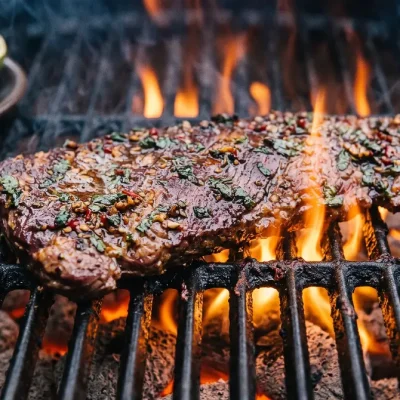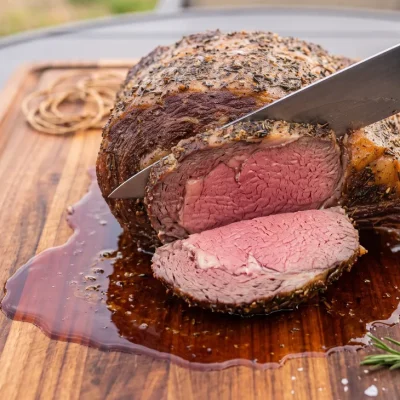
Imagine the crackle of wood, the smell of woodsmoke in the crisp air, and a thick, beautifully marbled piece of beef sizzling over open flames. There is something deeply primal and infinitely satisfying about live fire cooking steak. If you want to impress your dinner guests or simply treat yourself to a steakhouse-quality weekend feast, learning to tame the flame is your ticket to culinary perfection.
This recipe for cowboy steaks – a bone-in ribeye specifically frenched and trimmed for a spectacular presentation – combines the rugged appeal of campfire cooking with precision techniques. By utilizing a two-zone fire and a reverse-sear method, you will ensure a perfectly pink, edge-to-edge medium-rare interior beneath a gloriously charred crust. Whether you’re a seasoned grill master or a beginner looking to nail a grilled bone-in ribeye for the first time, this guide will walk you through every critical step.
Key Recipe Information
- Difficulty: Medium
- Total Time: 2 hours (includes dry-brining and resting)
- Active Time: 30 minutes
Nutrition Information (per serving):
- Calories: 850 kcal
- Protein: 65 g
- Fat: 62 g
- Carbohydrates: 1 g
- Sodium: 450 mg
Why You’ll Love This Recipe
- Fail-Proof Technique: By using the reverse sear method, we remove the guesswork, ensuring your steak is cooked perfectly on the inside before it ever hits high heat.
- Incredible Flavor: Cooking over live hardwood embers infuses the meat with an authentic, smoky aroma that gas or pan-searing simply cannot replicate.
- Show-Stopping Presentation: The exposed bone of a cowboy steak makes for a dramatic, rustic centerpiece that is guaranteed to turn heads.
Required Equipment
- Charcoal or wood-burning grill (e.g., Weber kettle, Kamado, or open-fire pit)
- High-quality instant-read meat thermometer (crucial for thick cuts)
- Long, heavy-duty grill tongs
- Wire cooling rack and a baking sheet
- Chimney starter (for lighting coals cleanly)
Ingredients
For the Steaks
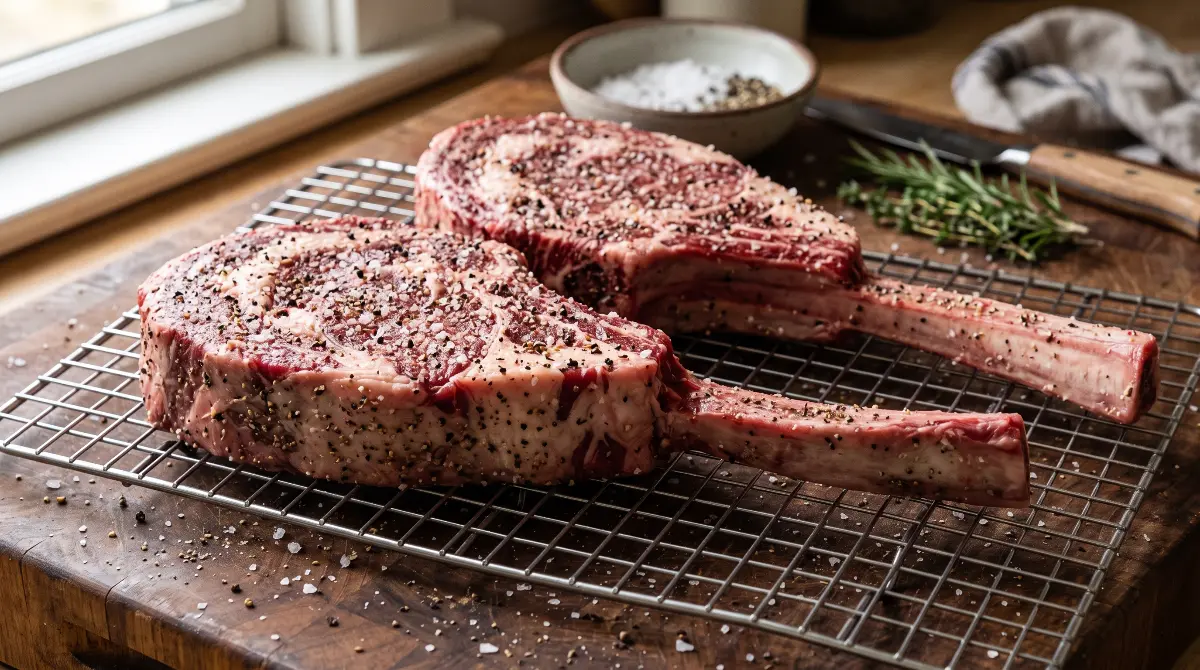
- 2 Cowboy Steaks (Bone-in Ribeyes): About 2 to 2.5 inches thick, roughly 24-32 oz each. (Tip: Look for abundant, web-like white marbling running through the red meat for the best flavor.)
- 1 tbsp Kosher Salt: Use coarse salt. (Tip: If using fine table salt, cut the amount in half to avoid over-salting.)
- 1 tbsp Coarsely Ground Black Pepper: Freshly cracked is highly recommended.
For the Garlic Herb Butter Finish (Optional)
- 4 tbsp Unsalted Butter: Room temperature.
- 2 Cloves Garlic: Minced or grated.
- 1 sprig Fresh Rosemary: Finely chopped.
- 1 tsp Fresh Thyme Leaves.
Step-by-Step Instructions
Step 1: Preparation and Dry Brining
- Pat the steaks completely dry using paper towels. A dry surface is the secret to an amazing crust.
- Season generously on all sides (including the fat cap) with kosher salt.
- Place the steaks on a wire rack set over a baking sheet and leave them uncovered in the refrigerator for at least 1 hour, or ideally overnight. This process, called dry brining, draws moisture out, concentrates flavor, and yields a phenomenal crust.
- Remove from the fridge 30 minutes before grilling to take the chill off, and apply the coarse black pepper.
Step 2: Building the Live Fire
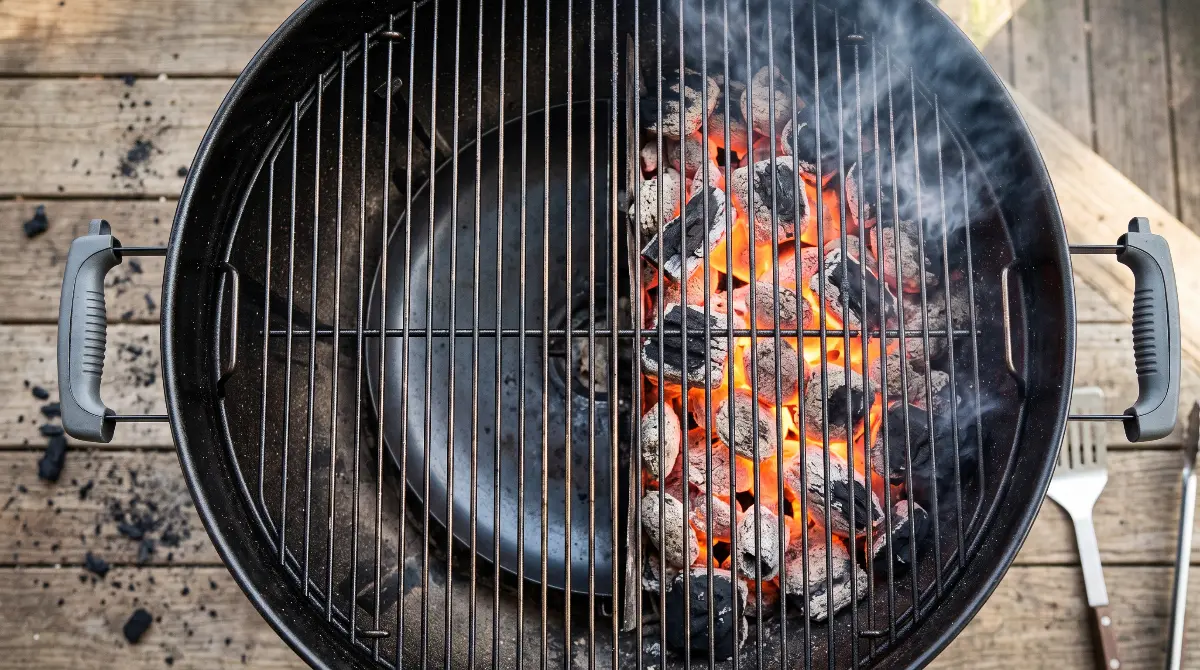
- Light a chimney full of lump charcoal or hardwood briquettes. Once they are ashed over, dump them onto exactly one half of your grill.
- Add 1-2 chunks of smoking wood (like oak or hickory) to the hot coals if desired.
- Leave the other side of the grill completely empty. This creates a “two-zone” fire: a direct hot zone for searing, and an indirect cool zone for gentle roasting.
- Preheat the cooking grate and brush it clean.
Step 3: The Reverse Sear
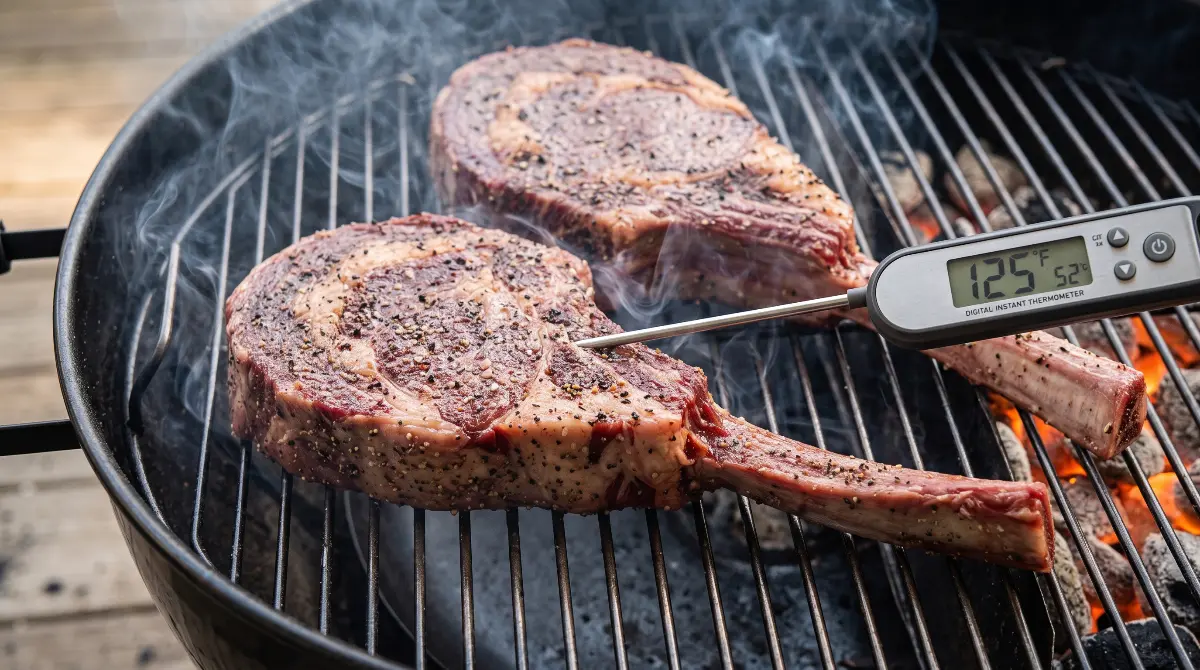
- Place the steaks on the cool side of the grill (the side without coals underneath).
- Close the lid and adjust your vents to maintain a gentle ambient temperature of around 250°F to 275°F (120°C to 135°C).
- Flip the steaks every 10 minutes to ensure even cooking and smoke absorption.
- Monitor the internal temperature using your instant-read thermometer. Remove the steaks to a cutting board when the center reaches 115°F (46°C) for a final medium-rare finish.
Step 4: Searing the Crust
- Stoke the fire. If your coals have died down, add a handful of fresh charcoal or small wood splits to the hot zone and let them ignite until the fire is roaring hot.
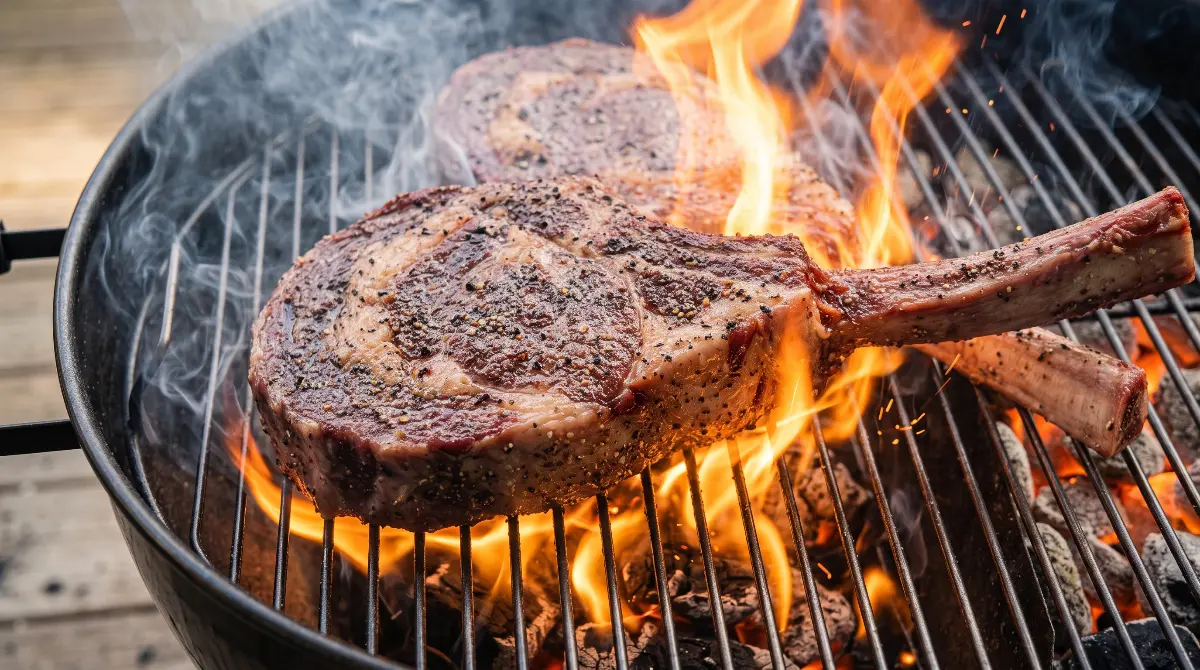
- Place the steaks directly over the blazing fire. Leave the grill lid open.
- Flip the meat frequently, about every 30 to 45 seconds. This builds an incredibly savory, charred crust without overcooking the inside.
- Sear the fat cap by holding the steak vertically with your tongs for about a minute to render the fat and make it crispy.
- Pull the steaks when the internal temperature hits 130°F (54°C).
Step 5: Resting and Serving
- Transfer the steaks back to a clean wire rack or wooden cutting board.
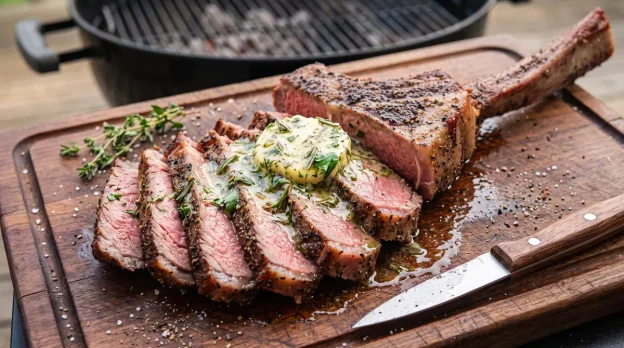
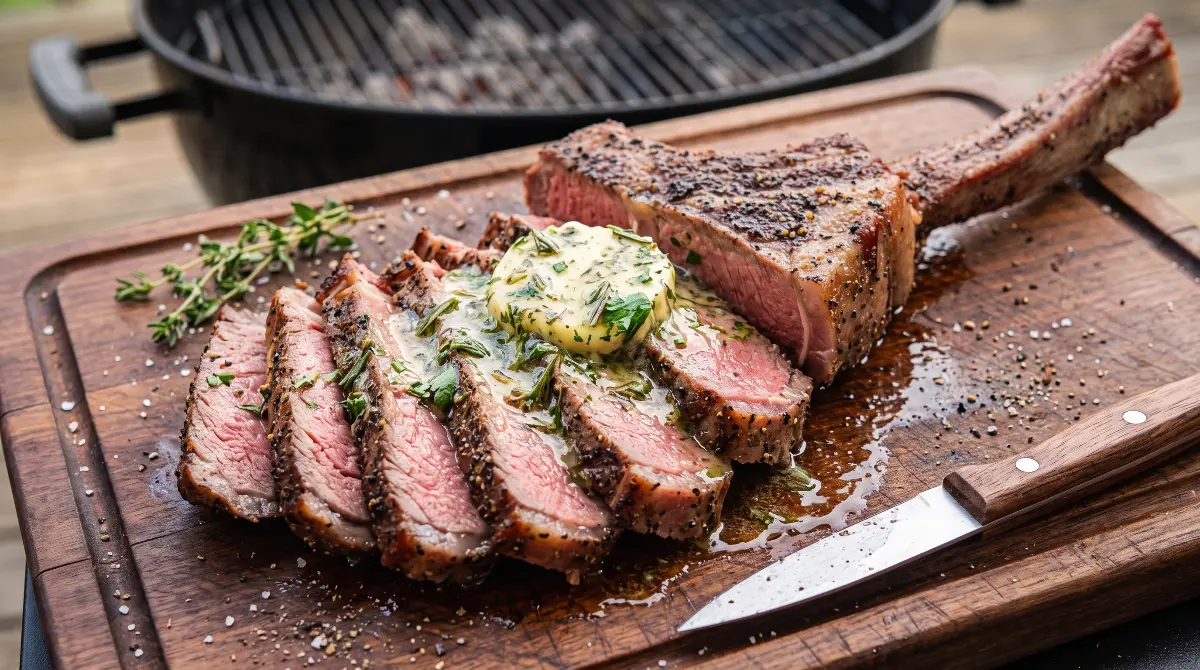
- Top immediately with the optional Garlic Herb Butter, allowing it to melt beautifully over the hot charred crust.
- Rest the meat for a minimum of 10 to 15 minutes. Do not skip this step! Resting allows the muscle fibers to relax and reabsorb their juices.
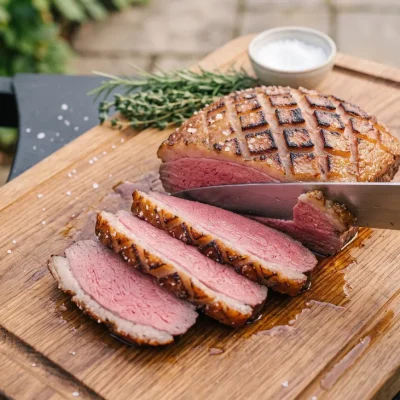
- Slice the steak by cutting the meat away from the bone first, then slicing it across the grain into thick strips. Serve immediately.
Chef’s Tips
- The Thermometer is King: When cooking steaks this thick, time is a poor indicator of doneness. An instant-read meat thermometer is non-negotiable for perfection.
- Mind the Bone: The meat right next to the bone cooks a little slower. When probing for temperature, insert the thermometer into the thickest part of the meat, avoiding the bone itself.
- Control the Flare-Ups: When searing over live fire, rendering fat will cause aggressive flare-ups. Don’t panic; just use your tongs to move the steak temporarily to the cool zone until the flames die down.
Variations & Adaptations
- Coffee Rubbed: Mix 1 tablespoon of finely ground dark roast coffee into your salt and pepper rub for an incredibly earthy, rich bark.
- Indoor Adaptation: No grill? No problem. You can reverse sear these in a 250°F oven, then finish them in a smoking hot cast-iron skillet with butter, garlic, and thyme.
Serving & Storage
Serving: A rich, hearty steak like this pairs beautifully with bright, acidic sides to cut through the fat. Try serving with a vibrant chimichurri sauce, grilled asparagus, or a classic wedge salad. Storage: Store leftover steak in an airtight container in the fridge for up to 3 days. To reheat without overcooking, slice the steak thin and warm it gently in a skillet over low heat, or eat it cold in a fantastic steak sandwich!
FAQ
What exactly is a Cowboy Steak?
A cowboy steak is a bone-in ribeye. It is very similar to a tomahawk steak, but the bone has been trimmed shorter to make it easier to handle and fit on a standard grill or pan. The bone helps insulate the meat while cooking, adding flavor and juiciness.
Can I cook this on a gas grill?
Absolutely. You can replicate the two-zone fire on a gas grill by turning half your burners onto high and leaving the other half completely off. To get the smoky flavor, wrap some soaked wood chips in a foil pouch, poke holes in it, and place it directly over the hot burners.
What temperature should I pull the steak off the grill for medium-rare?
For the reverse sear method, pull the steak off the indirect heat at 115°F. After the high-heat sear, pull the final steak off the grill at 130°F. The residual heat will carry over the internal temperature to a perfect 135°F (medium-rare) while it rests.
Why is resting the steak so important?
If you cut into a steak immediately off the grill, the high internal pressure will force all the juices to spill out onto your cutting board, leaving the meat dry. Resting allows the temperature to stabilize and the juices to redistribute evenly throughout the muscle fibers.
Ready to light the fire?
There is nothing quite as rewarding as slicing into a perfectly cooked, live-fire Cowboy Steak. If you try this recipe at home, please leave us a 5-star rating below and tag @BrickhouseGrille on Instagram so we can see your epic backyard barbecue results! Happy grilling!