A perfectly grilled sirloin cap has everything you want in a great steak—a crisp, flavorful fat cap, a juicy medium-rare center, and rich beefy flavor in every bite. While it doesn’t get as much attention as ribeye or tenderloin, this underrated cut delivers outstanding results on the grill at a much better price.
Often known by its French name, coulotte, or celebrated in South American steakhouses as picanha, this cut offers an unmatched combination of rich beefy flavor and melt-in-your-mouth tenderness. Because it comes from the top of the sirloin muscle where it does very little work, the meat remains beautifully tender, while the thick layer of fat on top bastes the beef as it cooks.
If you have been looking for an authentic Brazilian picanha recipe or simply want to learn how to grill coulotte steak to impress your weekend guests, you are in the right place. We are going to use a foolproof two-zone grilling method to ensure a magnificent crust without overcooking the center. Let’s fire up the grill!
Key Recipe Information
- Difficulty: Medium
- Total Time: 1 hour 30 minutes (includes 1 hour of resting)
- Active Time: 20 minutes
Nutrition Information (per serving)
Estimated for 6 servings, including a standard portion of the fat cap and a light drizzle of chimichurri.
- Calories: 450 kcal
- Protein: 35 g
- Fat: 32 g
- Carbohydrates: 2 g
- Sodium: 420 mg
Why You’ll Love This Recipe
- Incredible Flavor-to-Cost Ratio: It eats like a premium steakhouse cut but is significantly more budget-friendly than a ribeye or filet.
- Built-in Basting: The signature fat cap renders down during grilling, acting as a natural flavor-injector that keeps the meat incredibly juicy.
- Fail-Proof Technique: By using a two-zone grilling setup, you have complete control over the heat, eliminating the panic of sudden flare-ups ruining your meat.
- Crowd-Pleasing Presentation: Serving a whole grilled roast and carving it tableside is a guaranteed show-stopper.
Required Equipment
- Charcoal or gas grill (large enough for a two-zone setup)
- Instant-read meat thermometer (crucial for perfect doneness)
- Sharp carving knife
- Large cutting board (preferably one with a juice groove)
- Long-handled grill tongs
Ingredients
For the Sirloin Cap
- 1 whole Sirloin Cap / Coulotte roast (approx. 2 to 3 lbs) with the fat cap intact. (Tip: Ask your butcher to leave the fat cap at about 1/4 to 1/2-inch thick. Do not let them trim it completely off!)
- 2 tablespoons coarse Kosher salt (Tip: Avoid fine table salt, which will make the meat too salty and won’t create a good crust.)
- 1 tablespoon freshly ground black pepper
For the Optional Chimichurri Sauce
- 1 cup fresh parsley, finely chopped
- 3 cloves garlic, minced
- 1/4 cup red wine vinegar
- 1/2 cup extra-virgin olive oil
- 1 teaspoon dried oregano
- 1/2 teaspoon red pepper flakes
- Salt and pepper to taste
Step-by-Step Instructions
Step 1: Prep the Meat
- Remove the beef from the refrigerator about 45 minutes before grilling to allow it to come to room temperature.
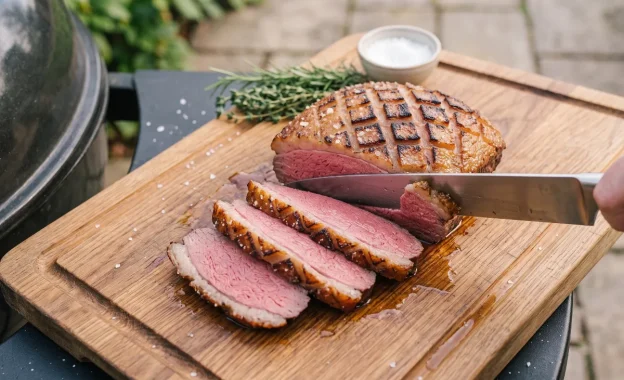
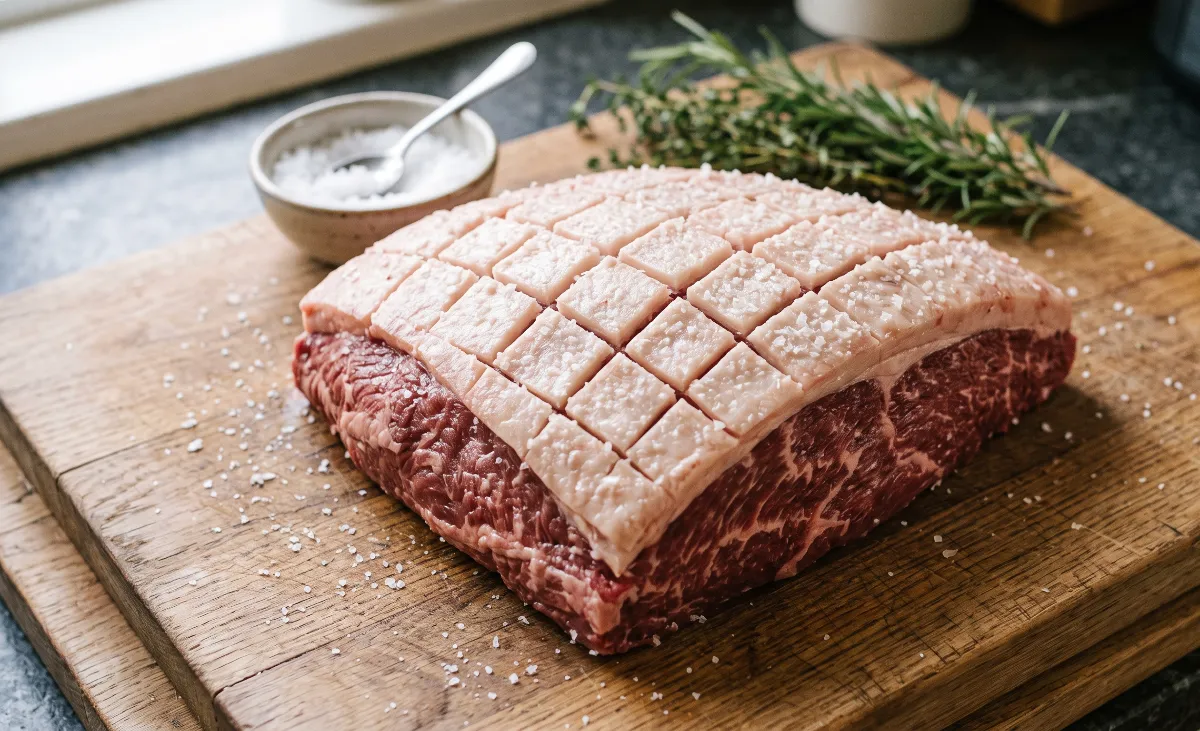
- Score the fat cap by taking a sharp knife and making shallow cuts in a crosshatch (diamond) pattern. Be careful to cut only through the fat, stopping just before you hit the red meat.
- Season generously by rubbing the coarse salt and black pepper all over the roast, pressing it firmly into the scored fat and the meat sides.
Step 2: Set Up the Grill
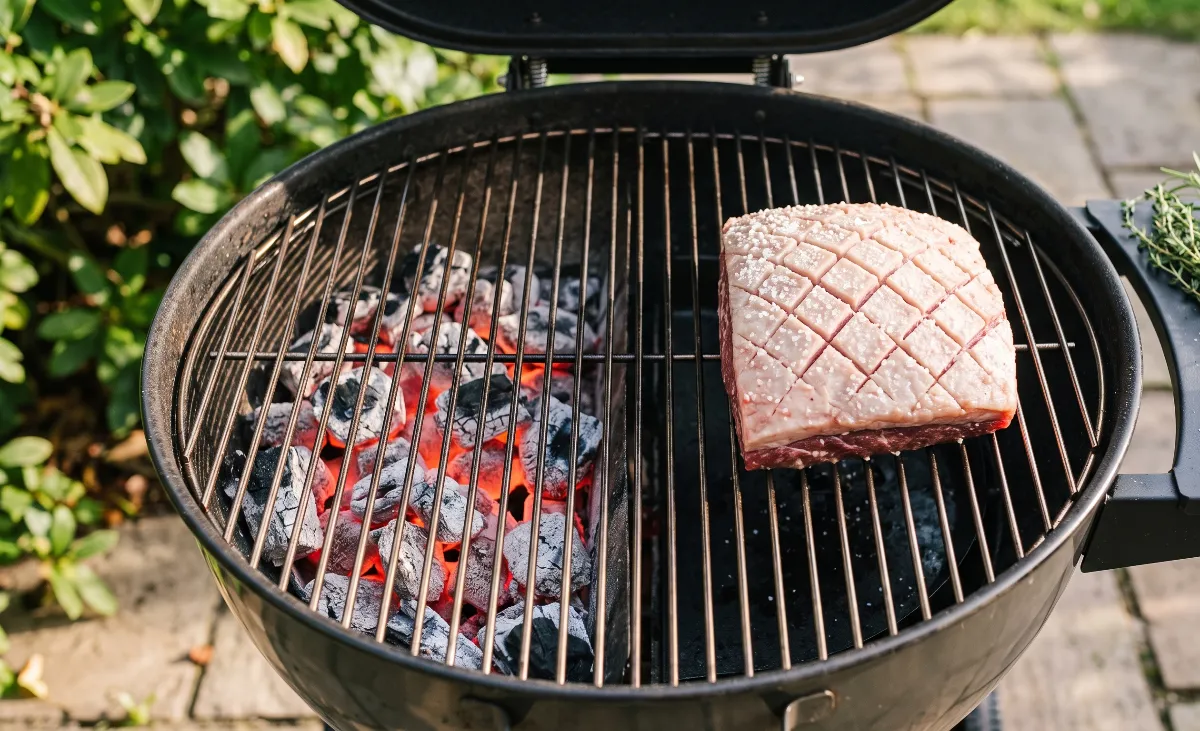
- Prepare a two-zone fire on your grill. If using charcoal, push all the hot coals to one side of the grill. If using a gas grill, turn half the burners to high and leave the other half off. Target a high-heat zone of around 450°F to 500°F.
- Clean and oil the grates thoroughly to prevent sticking.
Step 3: Grill and Render
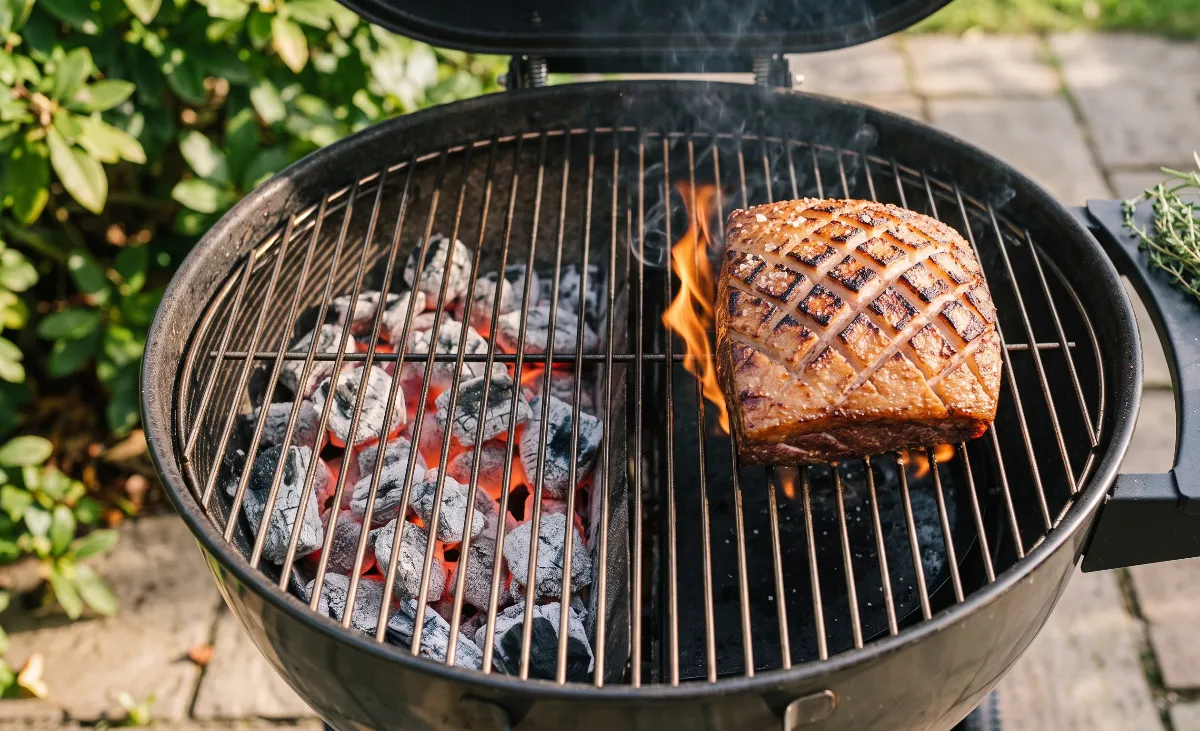
- Place the roast fat-side down directly over the hot coals (the direct heat zone). Let it sizzle for 3 to 5 minutes to render the fat and build a crust.
- Monitor for flare-ups. Dripping fat will cause flames. If the flames lick too high and threaten to burn the meat, temporarily move the roast to the cool side until the fire subsides.
- Flip and sear the bottom for another 3 to 4 minutes until a deep brown crust develops on the meat side.
Step 4: Finish and Rest
- Move the roast to the indirect heat side of the grill (away from the coals/flames) and close the grill lid.
- Cook gently for 15 to 25 minutes, checking the internal temperature with your meat thermometer every 5 minutes. Pull the meat off the grill when it reaches 125°F (51°C) for medium-rare, or 135°F (57°C) for medium.
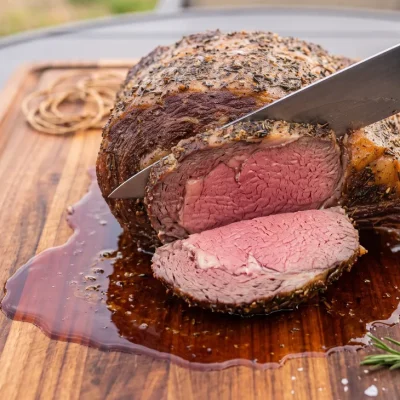
- Transfer to a cutting board and loosely tent with aluminum foil. Let the meat rest for a minimum of 15 minutes. This allows the muscle fibers to relax and the juices to redistribute.
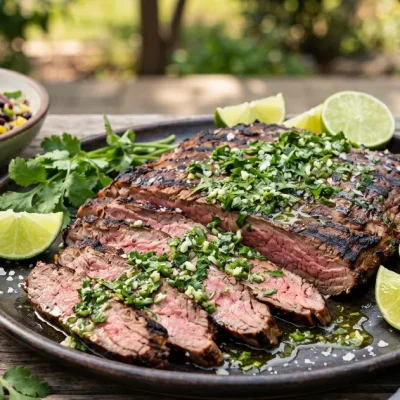
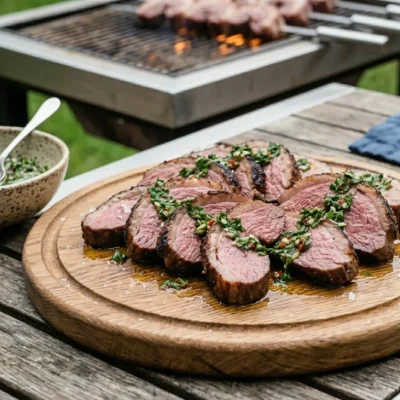
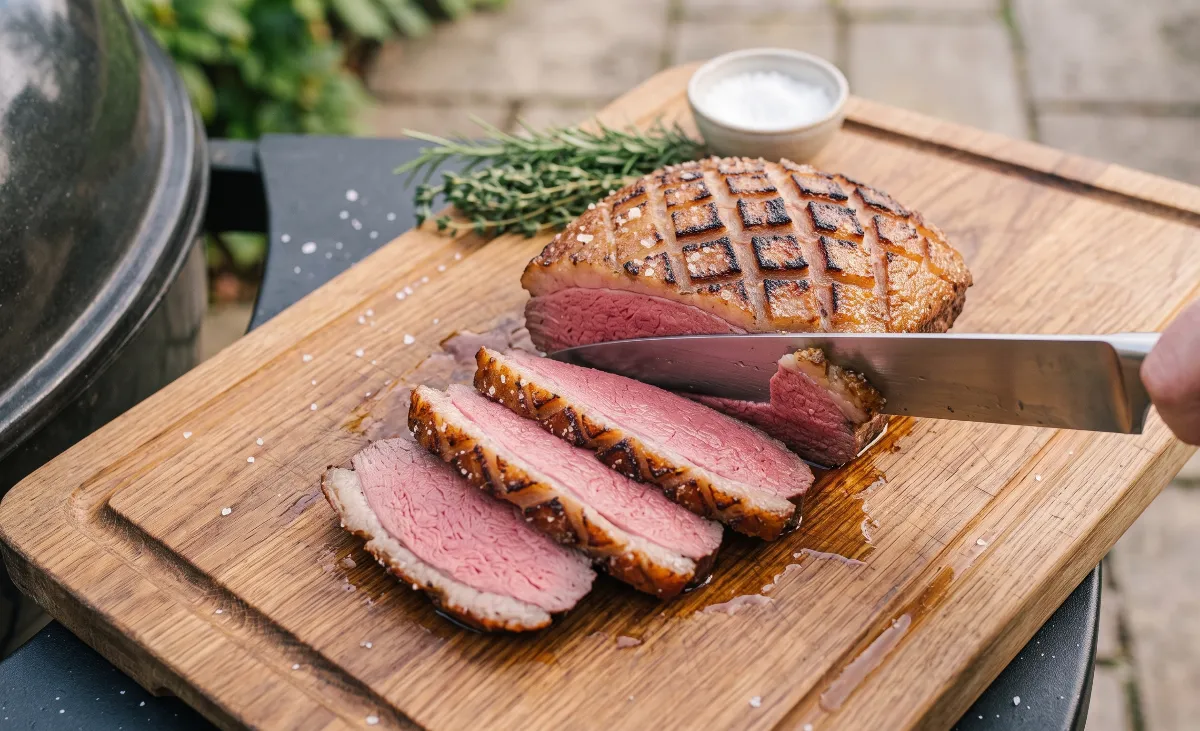
- Slice against the grain into thin strips and serve immediately, optionally topped with fresh chimichurri.
Chef’s Tips
- Embrace the Fat: Even if you don’t eat the fat cap, do not trim it off before cooking. It protects the meat from drying out and provides massive amounts of flavor.
- The Grain is Everything: The muscle fibers in a sirloin cap run distinctively in one direction. Always identify the direction of these lines and slice perpendicular to them. Slicing “against the grain” cuts those fibers short, guaranteeing tender chewing.
- Watch the Carryover Cooking: The internal temperature of the roast will continue to rise by 5 to 10 degrees while it rests. Always pull it off the grill slightly before it reaches your target temperature.
Variations & Adaptations
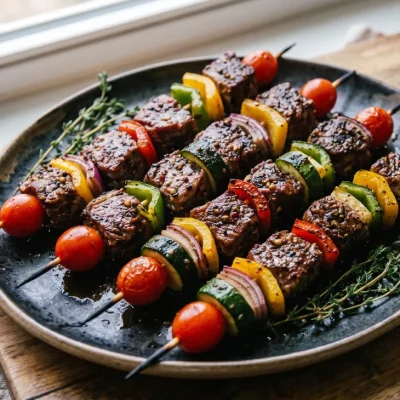
- Traditional Churrasco Style: Instead of grilling the roast whole, slice it with the grain into thick “C” shaped steaks, fold them so the fat is on the outside, and skewer them on long metal swords. Grill them directly over high heat. (When you slice them on the plate later, you will naturally be cutting against the grain!)
- Coffee Rub: For a robust, earthy crust, mix equal parts coarse salt, black pepper, and finely ground espresso or dark roast coffee beans before applying to the meat.
- Oven-Roasted: If you don’t have a grill, sear the fat cap in a ripping hot cast-iron skillet on the stove, then transfer the whole skillet to a 375°F (190°C) oven until the center reaches your desired temperature.
Serving & Storage
Serving: A rich, beefy cut like coulotte pairs beautifully with bright, acidic sides that cut through the richness. Serve with traditional chimichurri sauce, a crisp arugula salad with a lemon vinaigrette, or roasted garlic potatoes.
Storage: Store any leftover sliced beef in an airtight container in the refrigerator for up to 3 days. To reheat without overcooking, gently warm slices in a skillet over low heat with a splash of beef broth, or enjoy them cold in a gourmet steak sandwich.
FAQ
What is the difference between picanha, coulotte, and sirloin cap?
They are the exact same cut of meat! “Sirloin cap” is the anatomical name in the US, “coulotte” is the French culinary term, and “picanha” is the Brazilian Portuguese name.
Do I have to eat the fat cap?
No, eating the fat is a personal preference. However, it is highly recommended to leave it on during the cooking process to baste the meat. You can simply cut the fat off your individual slices on your plate if you prefer leaner bites.
Why is my sirloin cap tough?
If your steak turned out chewy, it is usually due to one of two reasons: it was cooked past medium (sirloin can become tough if overcooked), or it was sliced with the grain instead of against the grain. Always look for the lines of the muscle fibers and cut across them.
Can I marinate the sirloin cap before grilling?
While you can use a liquid marinade, traditionalists prefer to let the rich beef flavor shine with just coarse salt and pepper. If you do choose to marinate, avoid highly acidic mixtures for more than a few hours, as the acid can break down the meat’s texture and make it mushy.
What wood chips work best for smoking a sirloin cap?
For a robust, classic BBQ flavor, hickory or oak wood chunks are excellent choices that stand up well to the rich beef. If you prefer a sweeter, more subtle smokiness, cherry or pecan wood pairs beautifully with the savory crust.
Ready to transform your next backyard BBQ? Grab a beautiful sirloin cap from your local butcher, fire up the grill, and let us know how your roast turned out! Don’t forget to share your photos and tag Brickhouse Grille on social media!